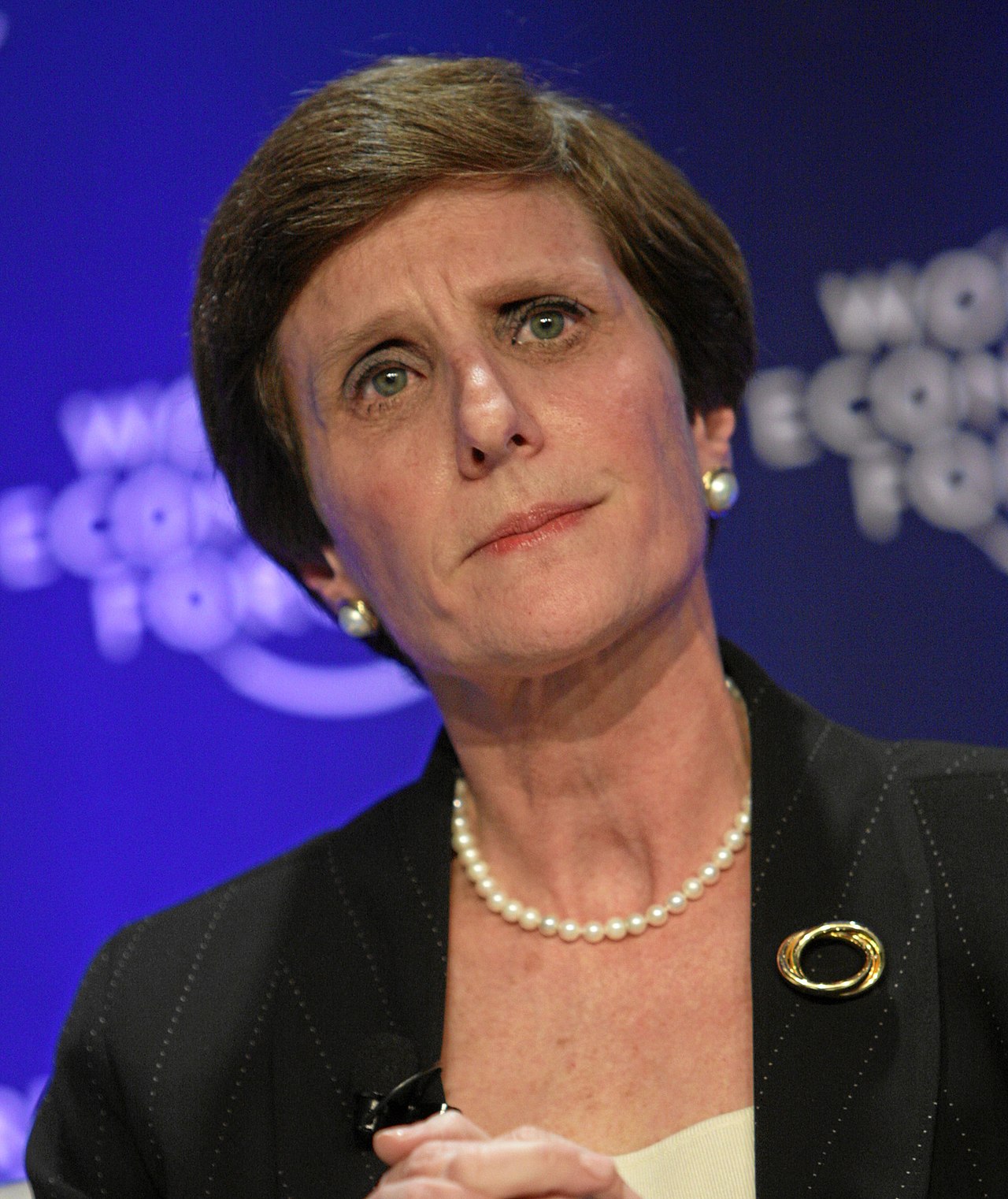
Irene Rosenfeld Net Worth & Salary: Unpacking an $80 Million Business Fortune
Irene Blecker Rosenfeld stands as a towering figure in the annals of American business leadership, a testament to strategic vision, relentless drive, and astute financial acumen. Born on May 3, 1953, in Westbury, New York, Rosenfeld carved out an extraordinary career in the highly competitive consumer goods industry. Her journey, marked by pivotal roles at global giants like General Foods, Kraft Foods, PepsiCo, and ultimately Mondelēz International, has culminated in an impressive financial standing. For anyone curious about the upper echelons of corporate wealth, understanding Irene Rosenfeld's net worth offers a fascinating case study in executive success.
As of mid-2017, authoritative sources estimated Irene Rosenfeld's net worth at a substantial $80 million. This impressive figure is not merely a reflection of her C-suite salaries, which reportedly exceeded $30 million annually during her most prominent years, but a culmination of decades of strategic decision-making, performance-based bonuses, stock options, and successful corporate restructuring. Her fortune underscores the significant financial rewards available to top-tier executives who can consistently deliver value and navigate complex global markets.
From Academic Rigor to Corporate Ladder: Rosenfeld's Foundational Years
Rosenfeld's path to an $80 million fortune began not in a boardroom, but in academia, laying a robust intellectual groundwork for her future endeavors. Raised in a Jewish family in Westbury, she pursued a comprehensive education that would prove invaluable throughout her career.
- W. Tresper Clarke High School: Her formative years were spent in her hometown, where she completed her secondary education.
- Cornell University: Rosenfeld's academic prowess shone brightly at Cornell University in Ithaca. She earned a Bachelor of Arts (BA) in Psychology in 1975, providing her with a deep understanding of consumer behavior – a critical asset in the marketing world.
- Advanced Degrees: Not content with a single degree, she continued her studies at Cornell, securing a Master of Science (MS) in Business Administration in 1977, followed by a PhD in Marketing and Statistics in 1980. These advanced degrees equipped her with rigorous analytical skills and a strategic framework for business operations, setting her apart in the corporate landscape. This dedication to continuous learning is a practical tip for aspiring leaders: a strong educational foundation can significantly enhance career trajectory and, by extension, future earning potential.
Immediately after completing her PhD, Rosenfeld plunged into the business world. Her career started at Dancer Fitzgerald Sample, an advertising agency in New York City, where she spent a year gaining initial industry experience. This early exposure to the advertising side of consumer goods offered crucial insights into how products are positioned and perceived by the public, a foundational element in understanding how to build a brand and drive sales.
Strategic Ascensions: Kraft, Frito-Lay, and the Path to Billions
The trajectory of Irene Rosenfeld's net worth is intrinsically linked to her strategic movements across some of the world's largest food and beverage corporations. Her ability to consistently identify opportunities, lead transformations, and drive growth became her hallmark.
General Foods and Kraft Foods: Building a Legacy
In 1981, Rosenfeld joined General Foods Corporation, taking on a role in consumer research. Over 15 years, she steadily climbed the ranks, eventually becoming a manager. Her tenure at General Foods coincided with significant industry consolidation. When the company was acquired by Philip Morris, a major tobacco company, Rosenfeld transitioned to its acquisitions, Kraft Foods. This move was pivotal, as Kraft was a powerhouse in the food industry. She quickly rose to prominence, taking charge of Kraft's entire Canadian division in 1996, demonstrating her capacity for international leadership.
The early 2000s saw Rosenfeld spearheading the integration of certain Philip Morris products into Kraft Foods, showcasing her talent for managing complex corporate mergers and optimizing product portfolios. Her strategic insights were further recognized when she was selected in 2001 to a committee tasked with preparing Kraft for its public stock offering, a clear indication of her elevated standing within the company and her influence on its financial future.
The PepsiCo Interlude and a Triumphant Return to Kraft
In 2004, Rosenfeld briefly departed Kraft, accepting the prestigious role of CEO and Chairwoman of Frito-Lay, a division of PepsiCo, Inc. This move to another industry leader further diversified her executive experience, giving her exposure to snack food innovation and distribution on a massive scale. Her time at Frito-Lay involved promoting iconic snack products, honing her skills in large-scale brand management.
However, her connection to Kraft remained strong. In a significant corporate coup, Rosenfeld returned to Kraft in 2006 as its CEO, and by the following year, she was named the company’s Chairwoman. This homecoming marked a new era of aggressive growth and strategic overhaul for Kraft, directly contributing a considerable amount to her accumulating fortune. Her return highlighted a key principle of executive success: being valued enough to be brought back, often with expanded powers and compensation.
The Mondelēz Split: A Masterstroke Defining Her Net Worth
Perhaps the most defining moment in Irene Rosenfeld's career, and a primary driver of her immense wealth, was the controversial but ultimately successful decision to split Kraft Foods into two independent publicly traded companies in 2011. This bold move underscored her strategic audacity and vision for the future of the food industry.
The split resulted in:
- Kraft Foods Group: This company focused on North American grocery products, including household brands like Oscar Mayer meats and Maxwell House coffee.
- Mondelēz International, Inc.: This new entity was created to operate as a global snack products powerhouse, marketing beloved brands worldwide such as Oreo cookies, Cadbury chocolates, and Trident gum.
Rosenfeld chose to remain as the Chairwoman and CEO of the newly formed Mondelēz International, recognizing the immense growth potential in the global snack market. This strategic decision was a masterclass in corporate restructuring, designed to unlock shareholder value by separating faster-growing international snack businesses from more mature North American grocery operations. This significant corporate maneuver increased Irene Rosenfeld's net worth by a large margin, through performance-related compensation and the value appreciation of her stock holdings in the new, dynamic company. For a deeper dive into this pivotal move, consider reading From Kraft to Mondelēz: Irene Rosenfeld's Path to $80M Net Worth.
Deconstructing Her Fortune: Beyond the Salary
While an annual salary reportedly over $30 million is undoubtedly a significant contributor to Irene Rosenfeld's net worth, it's crucial to understand that top executive compensation packages are multi-faceted. Her $80 million fortune is a composite of several elements:
- Base Salary: A substantial fixed annual income.
- Performance Bonuses: These are typically tied to company performance metrics, such as revenue growth, profit margins, and shareholder returns. Rosenfeld's consistent delivery of results at Kraft and Mondelēz would have ensured robust bonuses.
- Stock Options and Equity Awards: A major component of executive wealth. Executives are often granted options to buy company stock at a predetermined price, or restricted stock units that vest over time. As the company's stock price rises under their leadership (as Mondelēz's did), the value of these holdings skyrockets. This incentivizes long-term strategic decisions that benefit shareholders.
- Long-Term Incentive Plans: These plans often involve cash or equity awards tied to achieving specific multi-year goals.
- Retirement Benefits and Deferred Compensation: High-ranking executives often have robust retirement plans and deferred compensation arrangements that accumulate significant value over time.
Her tenure as CEO and Chairwoman of a multinational corporation like Mondelēz placed her in a select group of global business leaders whose compensation reflects the immense responsibilities and pressures of managing multi-billion dollar enterprises. Her ability to navigate acquisitions, divestitures, and market shifts directly translated into substantial financial rewards. More details on how she built this fortune can be found in Mondelēz CEO Irene Rosenfeld: Her $80 Million Net Worth Explained.
Lessons from a Leader: Practical Takeaways from Irene Rosenfeld's Career
Irene Rosenfeld's career offers valuable insights for aspiring business professionals and leaders:
- Invest in Education: Her multiple degrees in psychology, business administration, marketing, and statistics provided a unique blend of skills that allowed her to understand both the consumer and the market deeply. This holistic approach is a powerful tool.
- Embrace Strategic Risk: The decision to split Kraft Foods was highly controversial at the time but proved to be a masterstroke. Effective leaders are not afraid to make bold, calculated risks for long-term gain.
- Understand the Consumer: Her early background in psychology and consumer research highlights the importance of truly knowing your target audience. In the consumer goods industry, this is paramount.
- Adapt and Innovate: The shift to focus on global snacks with Mondelēz demonstrated an understanding of evolving market trends and the need to adapt business models accordingly.
- Cultivate Strong Leadership: Her ability to lead large teams, manage complex integrations, and inspire confidence was central to her success. Being a member of various organizations also broadened her influence and network.
Irene Rosenfeld's impact on the food and beverage industry is undeniable. Her legacy includes not only transforming iconic brands but also creating significant shareholder value through strategic leadership and courageous decision-making.
Conclusion
Irene Rosenfeld's journey from a New York upbringing to the helm of a global snacking giant is a compelling narrative of ambition, intellect, and strategic prowess. Her estimated $80 million net worth, driven by an impressive career that saw her navigating complex corporate landscapes and spearheading transformative initiatives, stands as a testament to her profound impact on the business world. Beyond the monetary figures, Rosenfeld's career offers a blueprint for how a combination of rigorous education, deep industry expertise, strategic vision, and decisive leadership can culminate in extraordinary professional and financial success, solidifying her place as one of the most influential businesswomen of her generation.
